
How Furniture Layout Supports Safety and Supervision in Facilities
Key Takeaways: 
- Furniture safety goes beyond construction — thoughtful layout directly impacts supervision, risk reduction, and daily operations in institutional environments.
- Clear sightlines and intentional spacing help staff monitor behavior, respond faster to incidents, and maintain safety without intrusive oversight.
- Strategic furniture placement reduces hazards, prevents misuse, and supports how spaces are actually used across healthcare, corrections, and residential settings.
- Well-designed, flexible furniture layouts can balance safety requirements with comfort, usability, and a more human-centered environment.
Safe institutional furniture starts with durable construction, but furniture layout also affects supervision, movement, risk reduction, and daily operations. The layout of that furniture — where it’s placed, how it interacts with the flow of people, and what it allows staff to see or miss — can make just as much of a difference in safety and supervision as the materials or construction.
In environments like behavioral health units, correctional facilities, and student dorms, furniture layout guidelines are more than design preferences. They’re essential tools that directly affect daily operations, risk management, and staff oversight.
Why Furniture Layout Is a Critical Safety Factor
Furniture can either support or hinder a facility’s ability to function safely. A misplaced bench might block emergency access. An overfilled room can become a hazard during high-stress situations. And a table placed just a few inches too high or too wide can quietly erode the usability of a shared space.
Effective furniture safety isn’t just about choosing the right product; it’s about placing that product in a way that works for both the people who use the space and the staff responsible for maintaining it.
Explore Jess Crate’s behavioral furniture line, crafted for safety, durability, and real-world use. Every piece is built with purpose and precision.
How Furniture Layout Improves Institutional Safety
Blind spots are one of the most common and preventable layout issues in institutional environments. When furniture blocks key sightlines or creates small pockets of unobserved space, it limits staff’s ability to monitor behavior or respond quickly to incidents. That’s especially problematic in high-risk areas like correctional common rooms or group therapy spaces, where line-of-sight is critical to de-escalation and early intervention.
This is where thoughtful adherence to furniture layout guidelines comes in. By planning the space with visibility and movement in mind, facilities reduce both the likelihood and impact of safety incidents.
Visibility and Sightlines: Supporting Effective Supervision
Clear sightlines allow staff to maintain awareness without constant physical presence, reducing the need for invasive observation while still keeping environments safe. In a dorm or healthcare setting, this might mean placing furniture in a way that allows full-room visibility from a hallway window or a central monitoring point. In correctional spaces, it could involve lowering furniture profiles to reduce visual obstructions.
Strategic layout choices can also speed up staff response times and help identify issues early, whether that’s a conflict brewing in a shared lounge or a patient in need of assistance.
Spacing and Clearance Guidelines for Safer Furniture Layouts
Proper spacing between furniture supports safety in two key ways: It allows for smooth, unobstructed movement and ensures compliance with safety codes, including those related to accessibility and emergency evacuation. Too little clearance can create unnecessary physical barriers; too much can disrupt the intended flow of a room, making it harder to supervise or use effectively.
For example, hospital-grade furniture needs to be arranged to accommodate wheelchairs, stretchers, and cleaning equipment — all without compromising patient privacy or staff workflows. Clearance isn’t merely a number; it’s a design tool that shapes how space is experienced and navigated.
Need furniture built to handle high-pressure environments? Explore the Crate Collection for our most durable, field-tested designs.
Furniture Placement and Functionality
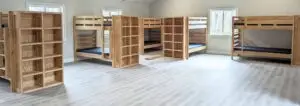
How furniture is placed directly influences how it’s used. Layouts that align with actual day-to-day activities help minimize unintended uses or dangerous behaviors. A table that’s too far from supervision points might become a hiding spot; a piece of lounge furniture placed in a high-traffic area might become a tripping hazard.
Intentional placement, on the other hand, can promote comfort, prevent misuse, and support healthy behavior. This balance is especially important in residential-style settings like student housing, where supervision needs must coexist with the desire for personal space and normalcy. A good dorm furniture layout allows for both and supports oversight without feeling overbearing.
Layout Considerations Across Facility Types
Every facility has its own layout demands. In healthcare environments, hospital-grade furniture needs to be placed to support infection control and clear access to patients while still allowing for staff safety and patient dignity. In student dorms, furniture should promote order and visibility without feeling sterile or institutional.
Even administrative areas benefit from intentional layout. A well-planned office furniture layout improves workflow, reduces physical strain, and helps maintain a clear line of sight across open workspaces, which is an important but often overlooked aspect of facility-wide safety planning.
Balancing Safety-Focused Layouts With Comfort and Usability
There’s a misconception that safe environments have to feel cold or clinical. In reality, safety-focused layouts can support calm, welcoming spaces when designed with user experience in mind. Creating logical flow, minimizing clutter, and preserving personal space all contribute to environments that feel secure and respectful.
Furniture design plays a major role here. Pieces that are appropriately sized, visually clean, and easy to move or reconfigure help maintain this balance. They give facility managers the flexibility to create layouts that evolve with user needs while still adhering to safety principles.
How Jess Crate Furniture Supports Safer Layouts 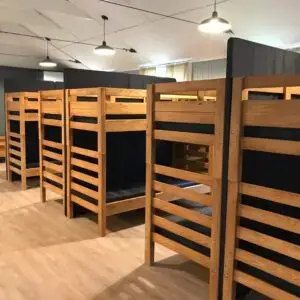
Jess Crate builds institutional furniture with layout in mind. From the beginning, each piece is designed to support flexible, functional configurations across a range of facility types. That means using stable proportions that fit typical room sizes, durable construction that stays safe over time, and modular options that allow for reconfiguration without compromising performance.
Whether you’re furnishing a secure facility, a camp, a healthcare unit, or a college dorm, Jess Crate’s collections are engineered to help you create spaces that are both supervisable and comfortable without sacrificing either.
Best Practices for Planning Safe and Supervisable Furniture Layouts
Planning layout should happen early, ideally in tandem with furniture selection. Understanding how a space is used, when it’s busiest, where staff need line of sight, and how users interact with their environment helps guide smarter choices. It also assures that furniture supports rather than complicates your safety strategy.
Working with experienced institutional furniture providers like Jess Crate means you’re not navigating those choices alone. Our team helps clients align furniture plans with architectural design, supervision models, and daily realities — all with an eye toward long-term durability and performance.
Plan Institutional Spaces That Support Safety and Oversight
The safest spaces are the ones where every detail works together: the right furniture, the right layout, and the right vision for how people will live and work within them. At Jess Crate, we believe furniture safety goes beyond construction, extending to how furniture functions in the real world.
When layouts support supervision, movement, and everyday use, the result is more than just compliance. It’s a space that feels intentional, safe, and ready for whatever the day brings.
Explore Jess Crate’s furniture solutions designed for safety, oversight, and everyday resilience.