
How to Choose Furniture Materials That Last in High-Use Facilities
Key Takeaways
- The right furniture materials determine how well institutional furniture performs under heavy daily use.
- Durable furniture built from solid wood, steel, and performance fabrics delivers lasting value and safety.
- Choosing quality materials lowers replacement costs and extends long-term performance in high-use spaces.
- Investing in long-lasting institutional furniture supports sustainability and reduces waste.
In high-use facilities, the wrong furniture materials can lead to cracked surfaces, unstable frames, and avoidable replacement costs. The right institutional furniture materials can improve durability, safety, and long-term value.
In environments like dorms, camps, and treatment centers, choosing the right institutional furniture materials isn’t just about aesthetics. It’s about function, safety, and longevity. When you understand which durable furniture materials offer true long-term performance, you’re better equipped to make purchasing decisions that actually protect your investment.
Institutional Furniture Materials for Long-Term Performance
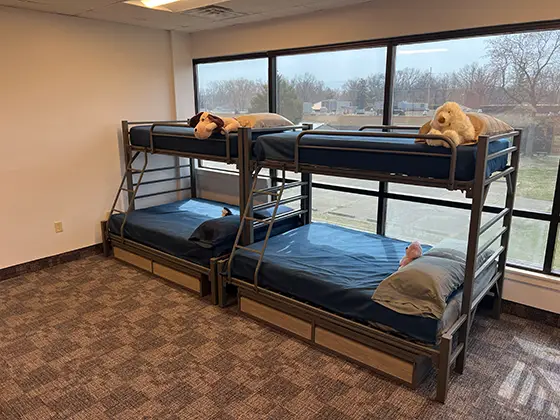
The key to long-lasting institutional furniture is choosing materials that can handle heavy use. Here’s how the most reliable options measure up:
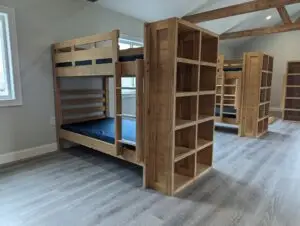
- Wood: Solid hardwoods such as oak, maple, and southern yellow pine remain high performers in institutional furniture. They resist dents, provide excellent weight-bearing strength, and can be refinished for extended use. Engineered woods like plywood and laminates have their place, too, offering stability and cost-conscious durability when built well. To maximize lifespan, wood should be kiln-dried to prevent warping and finished with protective coatings that resist moisture, scratches, and daily wear.
- Metal: For structural reliability, steel is a top choice. In beds, chairs, and tables, welded steel frames offer greater integrity than bolted alternatives, especially when paired with heavier gauge thickness. Powder-coated finishes add another layer of protection against rust and chipping, ensuring that metal components withstand constant use without failing prematurely.
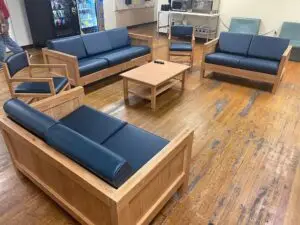
- Fabrics and upholstery: Comfort matters, but in high-traffic spaces, fabrics should also deliver resilience. Performance textiles such as vinyl, microfiber, and Crypton are engineered to resist stains, moisture, and microbial growth. Flame-retardant options meet safety requirements, while replaceable cushions extend the usability of each piece. Selecting the right upholstery means furniture remains inviting without sacrificing practicality.
- Specialty and alternative materials: Some facilities need more than wood or steel. Behavioral health centers, correctional facilities, and other demanding spaces often benefit from rotationally molded polyethylene, which resists impact, moisture, and tampering. Hybrid or composite materials can also provide long-lasting strength with minimal upkeep, making them smart options where extreme durability is required.
→ Key takeaway: The most durable institutional furniture starts with the right materials — ones chosen not just for how they look, but for how well they perform under pressure, over time.
Comparing Common Furniture Materials for High-Use Environments
| Material | Strengths | Best Use Cases | Considerations |
| Solid Wood | Strong, refinishable, long-lasting | Dorms, camps, residential settings | Requires protective finish, heavier to move |
| Engineered Wood (e.g. plywood, laminate) | Cost-effective, stable when well-constructed | Light-use spaces, budget-conscious settings | Less durable than solid wood under stress |
| Steel | Extremely durable, high weight capacity | Beds, tables, high-impact areas | Heavy, can be more industrial in appearance |
| Performance Fabrics (e.g. vinyl, microfiber, Crypton) | Stain-resistant, antimicrobial, flame-retardant | Seating in lounges, waiting areas, dorms | May need regular cleaning to maintain look |
| Rotationally Molded Polyethylene | Impact-resistant, tamper-proof, waterproof | Behavioral health, correctional facilities | Limited aesthetic flexibility |
| Hybrid/Composite Materials | High strength-to-weight ratio, low upkeep | Multipurpose furniture in demanding environments | Varies by formulation (check specs carefully) |
How to Choose Durable Furniture Materials for Your Facility
When evaluating long-lasting institutional furniture, consider the specific conditions of your environment:
- Traffic level: High-traffic areas demand the strongest materials, while lighter-use spaces may allow for more cost-conscious solutions.
- Maintenance capacity: Facilities with limited staff benefit from materials that clean easily and require minimal upkeep.
- Safety and compliance: Treatment centers, dorms, and group housing often need flame-retardant, antimicrobial, or anti-ligature features.
- Longevity vs. budget: Factor in the total cost of ownership. Spending slightly more on materials that last 10+ years often saves far more than replacing “bargain” options every few years.
By weighing these considerations, decision makers can align material choices with long-term value rather than short-term savings.
→ Key takeaway: Matching materials to your facility’s specific needs ensures performance, safety, and cost-efficiency.
Build Long-Term Value With Durable Institutional Furniture
At the end of the day, materials form the backbone of durable furniture that truly stands the test of time. From hardwoods and steel to performance fabrics and specialty plastics, the right choice protects budgets, improves user satisfaction, and reduces disruptions.
At Jess Crate, we build every piece with durability in mind, using furniture materials proven to perform in high-use settings. Our designs are backed by replacement parts, refinishing options, and factory-direct pricing to maximize long-term value.
If your facility is ready to invest in smarter, stronger solutions, contact us today and explore Jess Crate’s furniture built to last.