
Key Takeaways
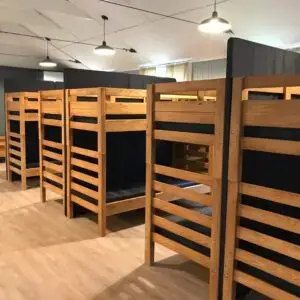
- Durable institutional furniture is essential in high-traffic environments because it ensures safety, longevity, and long-term value.
- The most reliable materials — solid wood, fully welded steel, and molded polyethylene — are chosen for strength and stability, not just appearance.
- Strong joinery, reinforced construction, and thoughtful design features like repairability and easy cleaning greatly extend a piece’s lifespan.
- Though it can cost more upfront, durable furniture saves money over time through reduced replacements, better safety, and sustainable use.
Walk into a school hallway, a summer camp cabin, or a busy shelter, and you’ll see it: furniture gets a beating. Students spill drinks on desks, kids climb on bunks, staff scrub surfaces with harsh chemicals. These are high-traffic spaces where furniture faces more abuse in a week than most home furniture pieces do in a year.
That’s why durable institutional furniture is so essential. The right pieces don’t just survive the daily chaos; they keep people safe, protect your investment, and reduce the need for frequent replacements.
This guide covers what to look for in long-lasting furniture, from materials and construction to design, finishes, and overall value.
What Materials Last the Longest?
The foundation of durability is material choice. The wrong pick here often guarantees early failure.
- Solid Wood: Southern yellow pine is a favorite in institutional furniture for its density and natural strength. When kiln-dried below 10% moisture, it resists warping, cracking, and pest damage, making it ideal for environments where humidity and constant cleaning are a reality.
- Steel: For maximum durability, fully welded steel frames outperform anything bolted together. Paired with a powder-coated finish, steel resists corrosion, scratches, and the harsh cleaning agents often used in institutional settings.
- Polyethylene: In some of the toughest environments, rotationally molded polyethylene is nearly indestructible. It doesn’t splinter, rust, or delaminate, making it a top choice for heavy-use furniture.
At Jess Crate, we use all three of these materials strategically to maximize durability.
—> Key takeaway: The best materials are chosen for strength and stability, not appearance alone.
At a Glance: Material Comparison
| Material | Strengths | Weaknesses | Best Use Case |
| Solid wood (pine) | Natural strength, resists pests when kiln-dried | Can warp if untreated | Dorms, schools |
| Steel (fully welded) | Extremely durable, corrosion-resistant | Heavy, less flexible | Hospitals, shelters |
| Polyethylene | Impact/chemical resistant, seamless | Less traditional look | Behavioral health, sanitation-heavy |
How Does Construction Impact Durability? 
Construction is where long-term durability is truly decided. Interlocking joinery, for instance, makes a major difference in case goods like chests and dressers. Techniques such as dado or dovetail joints create a bond that glue or nails alone cannot match. In drawers, dovetail joints ensure they won’t pull apart even after years of being opened and slammed shut.
Reinforcement at stress points is another critical factor. Corners, legs, and drawer bottoms are typically the first places where cheap furniture begins to sag, split, or wobble. Adding strength in these areas, such as using multi-ply construction, helps prevent premature failure and keeps pieces stable.
Steel furniture has its own construction considerations. Fully welded frames create a single, unified structure that eliminates weak points. Without bolts or partial connections that loosen over time, welded frames remain solid and reliable in ways that bolted or spot-welded options can’t.
—> Key takeaway: Strong joinery and reinforced construction separate furniture that lasts decades from furniture that starts to wobble after only a semester.
Design and Functional Features That Aid Durability
Thoughtful design can add years of life to a piece. Furniture that’s repairable, for example, provides a clear advantage. Being able to replace a cushion, a hinge, or a drawer glide rather than throwing away the entire piece saves money and limits unnecessary waste.
Ease of cleaning also plays a role in extending usability. Smooth, sealed surfaces with fewer cracks or seams make it harder for dirt and bacteria to accumulate, while also making maintenance faster and more effective. In institutional settings where cleaning is constant, these design choices have a major impact on longevity.
Safety and stability are just as important. Rounded edges reduce injury risks, and tip-resistant frames or modular designs make furniture adaptable to different environments. These aren’t luxuries — they’re necessities that keep people safe while reducing long-term wear.
—> Key takeaway: Smart design extends the life of furniture by making it safer, easier to maintain, and adaptable to changing needs.
How Important Are Finishes and Maintenance? 
A piece’s finish acts like armor. Without it, even strong furniture degrades quickly. Multilayer clear coats and laminated surfaces are particularly effective in withstanding the constant use that untreated wood can’t survive.
Upholstery choices are another important consideration. Fabrics designed to be stain-resistant, antimicrobial, and easy to clean are better suited for environments where spills and heavy use are the norm. Choosing the wrong fabric may mean replacements are needed far sooner than expected.
Durability also depends on the support available after purchase. A manufacturer like Jess Crate Furniture that offers replacement parts makes it possible to extend the life of a piece far beyond its initial years of use.
—> Key takeaway: Finishes and maintenance are critical defenses against daily wear, and ongoing manufacturer support is what ensures true long-term durability.
Is Durable Furniture Worth the Higher Cost?
Let’s be honest: Durable furniture costs more upfront. But here’s why it pays off:
- Cost Per Year: A cheap bunk bed might last two years; a well-built one might last 20. When you divide the cost by the lifespan, the “expensive” piece is often the better value.
- Fewer Replacements: Less disruption for staff and residents, fewer safety risks, and reduced stress.
- Sustainability: Choosing durable institutional furniture reduces waste and the environmental burden of constant replacements.
Of course, higher cost doesn’t always mean better value. Be wary of cosmetic features that don’t contribute to structural strength.
—> Key takeaway: Long-lasting furniture is an investment that saves money, time, and resources.
Checklist: What to Ask Before You Buy 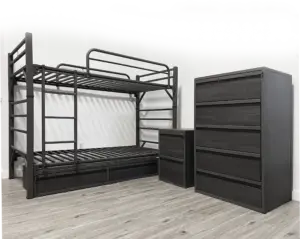
When evaluating furniture for high-traffic or demanding settings, use these questions to guide your decision:
- How will the furniture be used (high traffic, heavy cleaning, constant impact)?
- What materials are used (solid wood, welded steel, molded polyethylene)?
- How is it constructed (joinery, reinforced stress points)?
- Can it be repaired (replacement cushions, hardware, panels)?
- What finishes or protective features are applied (laminates, coatings, stain resistance)?
- What’s the real cost over time, not just the upfront price?
The Jess Crate Difference
At Jess Crate, we design furniture for the toughest environments. From kiln-dried pine to fully welded steel frames and seamless molded polyethylene, every product is engineered for strength, safety, and adaptability.
Our clients — camps, shelters, universities, and treatment centers — report our furniture lasting 10, 15, even 20 years under constant use. That’s proof that investing in craftsmanship and durability pays off.
Explore our collection of durable institutional furniture here.
Because in the end, furniture shouldn’t just fill a space; it should stand the test of time.