
Why Long-Lasting Furniture Solutions Need Different Standards Than Residential
Key Takeaways: 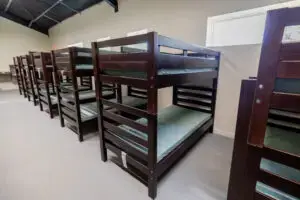
- Residential furniture can’t withstand the demands of institutional settings like dorms or healthcare facilities.
- Long-lasting furniture requires reinforced materials, safe design, and components built for constant use.
- Institutional-grade furniture supports safety, cleanability, and easy maintenance in high-traffic environments.
- Investing in durable institutional furniture cuts hidden costs from replacements, downtime, and repairs.
It looks like a solid chair. Feels sturdy enough. And the price? Hard to beat. So, why not use a residential piece in your dorm, group housing, or camp setting?
The short answer? It’s not built for your environment.
The long answer is this: Institutional furniture standards exist for a reason. Residential furniture simply isn’t made for the pressure and pace of high-traffic, high-turnover spaces. Whether it’s a bunk bed in a firehouse, a nightstand in a behavioral health unit, or a dining table in a group home, institutional furniture isn’t just used — it’s tested daily. And it needs to hold up. That’s where durable, long-lasting furniture solutions come in.
Residential vs. Institutional Furniture: Not All Furniture Is Built Equal
There’s a big difference between what works in a living room and what works in a shared living space. Residential vs. institutional furniture diverges at the point of purpose.
Residential furniture is typically built for:
- Occasional, light use
- A small number of users
- A focus on aesthetics over resilience
Institutional furniture is built for:
- Constant use — often 24/7
- High turnover or multiple users
- Frequent cleaning with harsh products
Those differences show up in every detail, from frame strength to material selection. Residential furniture often fails fast in institutional settings, leading to unsafe conditions and frequent replacements.
→ Key takeaway: Institutional furniture is purpose-built to handle heavy use, while residential furniture isn’t designed for shared or demanding environments.
Durability: Designed for the Real World
In institutions, durable furniture is essential for longevity. Institutional-grade pieces should include:
- Reinforced joints and frames
- Commercial-grade materials (moisture-controlled woods, metals, and plastics)
- Impact-resistant finishes for long-term wear
These structural upgrades matter. They’re what allow long-lasting furniture solutions to endure where consumer-grade items would fail within months.
→ Key takeaway: Durability isn’t about surviving longer, but performing better under real-world pressure.
Safety First: More Than Just Sturdy
Strength alone isn’t enough. Institutional furniture standards focus on how furniture interacts with people and space, especially in environments where safety is a daily concern, such as schools, treatment centers, and secure facilities.
Common institutional safety features include:
- Rounded edges and reduced pinch points
- Stable construction that prevents tipping
- Tamper- and ligature-resistant hardware for secure settings
→ Key takeaway: Institutional furniture is engineered for safety, not just strength, thereby reducing risks while maintaining usability.

Built for Cleaning, Built to Last
High-use environments require furniture that can stand up to constant cleaning without losing performance.
At Jess Crate, we design for that reality:
- Sealed surfaces and edges to resist moisture
- Finishes that hold up to commercial cleaning agents
- Joints and components built to avoid debris build-up
And when parts wear? We make them easy to maintain with modular components, accessible parts, and refinishing options that extend each piece’s lifespan.
→ Key takeaway: Institutional-grade furniture resists wear from constant cleaning and supports maintenance with repairable components.
Pressure-Tested: Real Environments, Real Demands
No living room compares to what institutional furniture goes through. These pieces face real-world challenges every day.
- In student housing: Beds and dressers withstand seasonal turnover, rough handling, and constant movement.
- In healthcare or behavioral health: Furniture must balance user safety with comfort and cleanability.
- In corrections: Strength and simplicity are nonnegotiable. Tamper-resistance is critical.
A broken bedframe or unstable table isn’t just inconvenient. It’s disruptive, dangerous, and expensive to replace.
→ Key takeaway: Institutional environments demand pressure-tested, durable furniture that performs where residential options would quickly fail.
Looking for maximum strength in high-impact environments? Explore our Steel Collection, engineered to handle the most demanding institutional use cases.
Jess Crate Meets and Exceeds Institutional Standards
We don’t build for showrooms. We build for shift changes, summer camps, and college move-ins.
Jess Crate products are engineered with institutional furniture standards in mind. That means:
- Long-term durability, including steel reinforcements and kiln-dried wood
- Built-in safety features like rounded edges and stable structures
- Performance-driven details, from cleanable finishes to replaceable parts
→ Key takeaway: Whether you’re furnishing a firehouse, a group home, or a university residence hall, our institutional furniture is built to last.
Cost vs. Value: It’s Not Just What You Pay Upfront 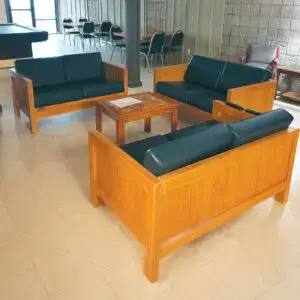
A cheaper residential piece might save money today, but at what cost tomorrow?
Frequent replacements, staff time for repairs, and inconsistent aesthetics add up fast. Durable institutional furniture minimizes those hidden costs by offering dependable performance over time.
→ Key takeaway: Long-lasting furniture solutions reduce overall costs by cutting down on replacements, downtime, and maintenance.
Standards Build Strategy
Understanding institutional furniture standards helps you make smarter decisions.
Furniture that’s designed for your space and use case supports:
- User safety and comfort
- Operational efficiency
- Space optimization
- Sustainability goals through longer lifespans and fewer replacements
It’s the foundation of a smarter, more resilient facility.
→ Key takeaway: Institutional furniture standards support smarter operations through safer, more efficient, and more sustainable choices.
Built for Your Space, Built to Last
Furniture should support both the people who use it and the staff who maintain it. In institutional settings, that requires more than just good looks. It requires strength, safety, and longevity that consumer-grade pieces simply can’t offer.
Jess Crate delivers long-lasting furniture solutions that meet institutional standards, perform under pressure, and last for years.
Explore our full line of durable, high-performance furniture.