
Dormitory Furniture Essentials for Colleges and Residential Facilities
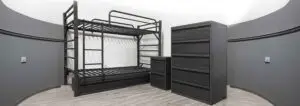
Key Takeaways:
- High-quality dormitory furniture must be built to institutional standards to withstand daily use, resident turnover, and long-term wear in shared living environments.
- Durable commercial dormitory furniture for beds and bunks should support dynamic loads, include safety features, and maintain structural integrity over multiple years of use.
- Effective dorm room furniture design prioritizes integrated storage solutions like dressers and dormitory furniture wardrobes to reduce clutter and improve organization.
- Functional furniture for residential facilities includes compact desks and multi-use layouts that maximize limited space while supporting daily living and study needs.
Outfitting a dormitory or shared residential space is a significant investment, and the decisions made at the purchasing stage have consequences that play out over years of daily use. Dorm furniture that looks adequate on arrival but begins to fail within a few seasons creates a cycle of replacement costs, maintenance demands, and resident dissatisfaction that institutions can ill afford. Getting it right from the start means understanding what commercial dormitory furniture actually requires and why those requirements differ substantially from what consumer retail options can deliver.
Whether you are furnishing a college dormitory, a group home, a residential treatment facility, or any other shared living environment, the foundational furniture pieces are largely consistent. Dorm room furniture needs to accommodate sleeping, storage, studying, and daily personal organization in a space that is often smaller than residents would prefer and shared with at least one other person. Furniture for residential facilities adds further demands around durability, cleanability, and safety that standard residential pieces simply are not built to meet. The right dormitory furniture selection addresses all ofthese needs with institutional-grade construction that holds up across multiple occupancy cycles.
Beds and Bunks: The Foundation of Any Dorm Room
The bed is the most used and most structurally tested piece of furniture in any dormitory setting. It needs to support varied occupant weights, withstand nightly use across years of resident turnover, and maintain its structural integrity without requiring constant maintenance.
For high-occupancy settings, commercial dormitory furniture specifications for beds typically center on a few non-negotiable features. Frame construction should use multi-point fastening rather than staples or compressed fasteners that loosen over time. Weight capacity should be engineered for dynamic loads, not just static weight. And the sleeping platform should provide consistent, even support across the full mattress surface.
In rooms where space is limited, bunk configurations are the most efficient solution. Space-saving bunk arrangements allow facilities to maximize occupancy without expanding the room’s footprint. Twin-over-twin configurations are the most common, but triple bunks and lofted options are worth considering depending on ceiling height and room dimensions.
Safety considerations for dormitory beds are equally important. Guardrail height, ladder design, and frame stability are all factors that matter as much in a college dorm as they do in a camp cabin, and they deserve careful evaluation before any purchasing decision is made.
Key Takeaway: Dormitory beds require institutional-grade construction that handles dynamic loads, supports safe upper bunk access, and maintains structural integrity through years of resident turnover.
Storage Solutions: Dressers, Wardrobes, and Beyond 
Personal storage is one of the most consistent sources of friction in shared residential spaces. When residents do not have adequate, clearly defined storage for their belongings, rooms become cluttered, conflicts arise, and facilities teams spend more time managing disorder than they should.
The core storage pieces for most dormitory configurations include:
- Dressers sized to fit the room without consuming floor space needed for movement and access. Four- to six-drawer configurations accommodate most resident storage needs without requiring additional freestanding pieces.
- Dormitory furniture wardrobes are essential in rooms without built-in closets. A well-designed dormitory furniture wardrobe provides hanging space, shelf storage, and sometimes drawer capacity in a single footprint, significantly reducing the number of individual pieces needed per room.
- Under-bed storage drawers that integrate with the bed frame to use otherwise wasted space for seasonal items, linens, or personal belongings.
- Shelving and cubby systems along wall space for daily-access items that would otherwise accumulate on desks and windowsills.
For residential group home furniture applications, storage design takes on additional importance. Residents in group homes and treatment facilities often have specific organizational needs, and furniture that supports clear personal boundaries within shared spaces contributes meaningfully to resident comfort and program effectiveness.
Key Takeaway: Adequate, well-configured storage is one of the most important factors in keeping shared residential spaces functional. Dressers, wardrobes, and integrated storage reduce clutter and support resident organization without multiplying the number of pieces in the room.
Desks and Study Areas: Function Without the Footprint
Not every residential facility requires dedicated study furniture, but for college dormitories and residential schools, a functional desk setup is a baseline expectation. The challenge is providing adequate workspace in rooms where floor space is already spoken for.
Compact desk configurations that fit against a wall without encroaching on the central room area are the most practical solution for most dormitory layouts. In lofted bed configurations, a desk integrated beneath the sleeping surface is an efficient use of vertical space that eliminates the need for a separate desk footprint entirely.
Whatever the configuration, dormitory desks should be built to the same institutional standard as the rest of the room’s furniture. Surfaces that scratch easily, legs that wobble, or drawer slides that stick after a semester of use create the kind of low-grade friction that residents notice, and facilities teams end up managing. Commercial dormitory furniture standards apply to study furniture just as they do to beds and storage.
Key Takeaway: Compact, wall-aligned desk configurations or lofted bed integrations provide functional study space without consuming floor area that shared rooms can rarely afford to spare.
Selecting the Right Partner for Dormitory Outfitting
Furnishing a dormitory or shared residential facility is not a one-time transaction. It is the beginning of a long-term relationship between an institution and its furniture, and one that involves maintenance, replacement parts, periodic refreshes, and the confidence that pieces will perform reliably without constant attention.
Commercial dormitory furniture suppliers who understand institutional demand offer more than products. They offer the knowledge to help facilities make decisions that hold up over time, and the infrastructure to support those decisions after the sale. Jess Crate’s factory-direct model means institutions receive genuine institutional-grade construction without the markup of distributors and access to in-house expertise on what works in high-occupancy shared living environments.
Explore our crate furniture line for handcrafted wood dormitory options, the steel furniture collection for metal frame alternatives, and mattresses and linens to complete each room with components built to the same standard.
For facilities managing behavioral health or treatment environments, Jess Crate’s behavioral furniture line offers specialized options designed for those specific settings. Browse the full range at jesscrate.com to find the right configuration for your facility.