
How Long Does Engineered Wood Furniture Last in High-Use Settings?
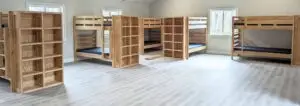
Key Takeaways:
- Understanding how long engineered wood furniture lasts is critical, as it typically shows significant wear within three to five years in high-use institutional environments.
- When evaluating how long furniture lasts, engineered wood often fails due to joint degradation, moisture damage, and surface wear under heavy daily use.
- Choosing long-lasting furniture means prioritizing materials like solid wood or steel, which offer greater durability, repairability, and long-term value.
- Investing in commercial-grade furniture reduces total cost of ownership by minimizing replacements, maintenance, and operational disruptions over time.
When facilities managers and procurement teams begin evaluating furniture for high-use institutional settings, engineered wood often appears as an attractive option. It is widely available, frequentlypriced lower than solid wood alternatives, and can look comparable on a showroom floor. But the more relevant question for anyone outfitting a dormitory, group home, camp, or treatment facility is not how engineered wood furniture looks on day one. It is how long does engineered wood furniture last under the kind of sustained, heavy daily use that those environments generate.
The honest answer requires understanding what engineered wood actually is, how it responds to institutional stress over time, and how it compares to solid wood and metal when how long does furniture last is the primary purchasing consideration. For facilities where commercial-grade furniture is a necessity rather than a preference, these distinctions carry real financial and operational weight.
What Engineered Wood Actually Is
Engineered wood is a broad category that includes several distinct products, each with different performance characteristics. The most common types found in furniture are particleboard, medium-density fiberboard (MDF), and plywood. Understanding the differences matters because their durability profiles vary considerably.
- Particleboard is made from compressed wood chips and resin. It is the least expensive and least durable of the three, with low screw-holding capacity and high vulnerability to moisture. It is the material most likely to be found in budget furniture options marketed for institutional use.
- MDF is denser than particleboard and takes paint and veneer finishes well, but it shares similar weaknesses regarding moisture and edge durability. It is heavier than solid wood of comparable size without offering equivalent strength.
- Plywood is the strongest engineered option, made from cross-laminated wood veneers that give it respectable structural integrity and better screw-holding capacity than either particleboard or MDF.
What all three share is a fundamental limitation in high-use environments: They do not recover from damage the way solid wood does, and they are significantly more vulnerable to the moisture exposure that institutional settings frequently generate.
Key Takeaway: Engineered wood encompasses several distinct materials with different durability profiles. Plywood performs best among them, but all three share vulnerabilities around moisture and repairability that matter significantly in institutional settings.
How Engineered Wood Performs Under Institutional Stress
In a residential setting with moderate use, quality engineered wood furniture can perform adequately for several years. The calculus changes substantially in high-occupancy environments where the same piece absorbs daily stress from multiple users, cleaning protocols involve repeated moisture exposure, and there is no reduction in intensity between occupancy cycles.
The specific failure points that emerge in institutional use include:
- Joint degradation: Engineered wood has limited screw-holding capacity compared to solid wood. In furniture that is moved, shifted, or subjected to lateral stress regularly, screws begin to strip from the material, joints loosen, and structural integrity declines. This process accelerates in proportion to usage intensity.
- Surface wear: Veneer and laminate surfaces on engineered wood pieces chip, peel, and lift at edges and corners under heavy use. Unlike solid wood, which can be sanded and refinished, engineered wood surfaces that have been compromised generally cannot be restored.
- Moisture damage: Particleboard and MDF absorb moisture readily when surface finishes are breached. Swelling, warping, and delamination follow. In environments where cleaning involves liquid products applied regularly, this is not a hypothetical risk.
For context, long-lasting furniture in a true institutional setting typically means 10 to 15 years or more of reliable performance. Engineered wood furniture in those same settings often shows significant structural and surface degradation within three to five years, particularly in the highest-stress applications like beds, seating, and storage pieces used by multiple occupants.
Key Takeaway: Engineered wood furniture’s most common failure points, such as joint degradation, surface wear, and moisture damage, are all accelerated by exactly the conditions that define institutional use. Realistic lifespan expectations in those settings are considerably shorter than marketing materials typically suggest.
Solid Wood and Metal: How the Alternatives Compare 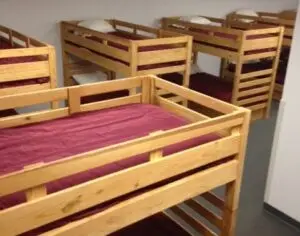
When evaluating the best materials for long-lasting living room furniture or, more relevantly, long-lasting institutional furniture, solid wood and metal represent the two most defensible choices for high-use environments.
| Feature | Engineered Wood | Solid Wood | Steel / Metal |
| Screw-holding capacity | Low to moderate | High | Very high |
| Moisture resistance | Poor to moderate | Good (with proper finish) | Excellent |
| Surface repairability | Limited | High | Moderate |
| Structural longevity in heavy use | 3–5 years | 10–20+ years | 15–25+ years |
| Weight | Moderate to heavy | Moderate | Heavy |
| Refinishability | No | Yes | Limited |
| Cost over time | Higher (frequent replacement) | Lower (fewer replacements) | Lower (fewer replacements) |
Solid wood furniture built for institutional use, particularly from dense, stable species like Southern Yellow Pine, combines structural strength with genuine repairability. Surface scratches and finish wear can be addressed with light sanding and restaining, a straightforward process that restores appearance without replacing the piece. Solid wood construction also holds fasteners far more reliably than engineered alternatives, which directly affects how long joints remain tight under the lateral stress of daily institutional use.
Steel furniture offers the highest structural integrity of the three options and is essentially immune to the moisture-related failures that affect wood-based materials. It is particularly well- suited to environments where cleaning protocols are aggressive or where maximum load-bearing capacity is a priority.
Key Takeaway: Both solid wood and steel outperform engineered wood in every durability category that matters for institutional settings. The performance gap widens considerably as usage intensity increases.
Making the Right Material Decision for Your Facility
For facilities evaluating commercial-grade furniture options, the appeal of engineered wood is understandable, with lower upfront costs and broad availability, making it an easy default. But the true costof a furniture purchase is not the invoice price. It is the total cost across the full ownership period, including replacements, repairs, and the operational disruption that comes with furniture that fails mid-season or mid-occupancy cycle.
Solid wood institutional furniture and steel alternatives consistently deliver lower total cost of ownership in high-use settings precisely because they are designed for the demands those settings place on them. Paired with mattresses and linens built to the same institutional standard, they form a complete room solution that holds up across years of occupancy rather than requiring piecemeal replacement.
For facilities outfitting behavioral health or treatment environments, purpose-built behavioral furniture addresses the additional structural and safety considerations those settings require. Browse the full range at jesscrate.com to find the right fit for your facility’s specific demands.